
Collaborations of Care
A Fractal Manifesto
“How we are at the small scale is how we are at the large scale. The patterns of the universe repeat at scale. There is a structural echo that suggests two things: one, that there are shapes and patterns fundamental to our universe, and two, that what we practice at a small scale can reverberate to the largest scale.” – adrienne maree brown, Emergent Strategy (2017)
“The readers of here are future.” – Édouard Glissant, Malemort (1975)
We invite students, instructors, and visitors to our classrooms and learning environment into the following orientation to collective care as active dreamers, artists, hopeful humyns, and practitioners, so that we may embody the support and healing we wish to bring forth into the world, today and in the future, through these acts of awareness, learning, reflexivity, conflict resolution, and care.
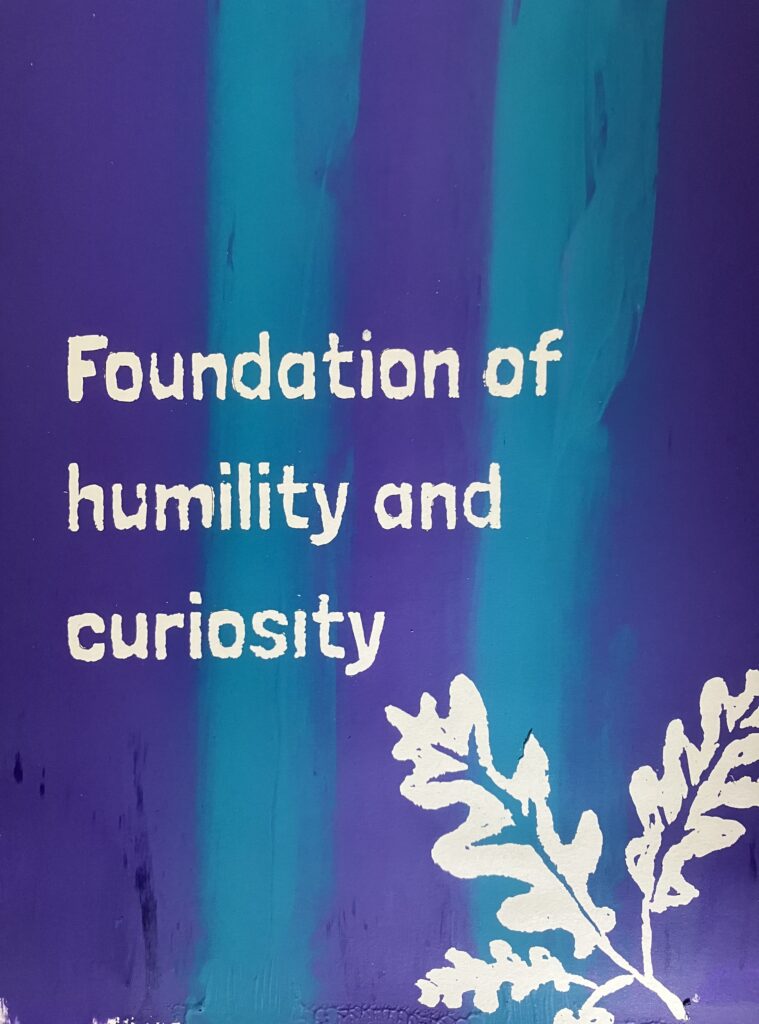
Foundation of humility and curiosity: We commit to continual learning and growth in our awareness of patterns of oppression and practices of liberation and care. While we honour and acknowledge our own and each other’s experiences, knowledge, wisdoms, and values that we bring into this shared space, we will not have an answer to every question that emerges, there’s no fixed path out of the problems we experience or witness. We embrace an orientation in curiosity, and patience with the feelings of not-knowing, to make space for emergent possibilities we did not previously imagine.
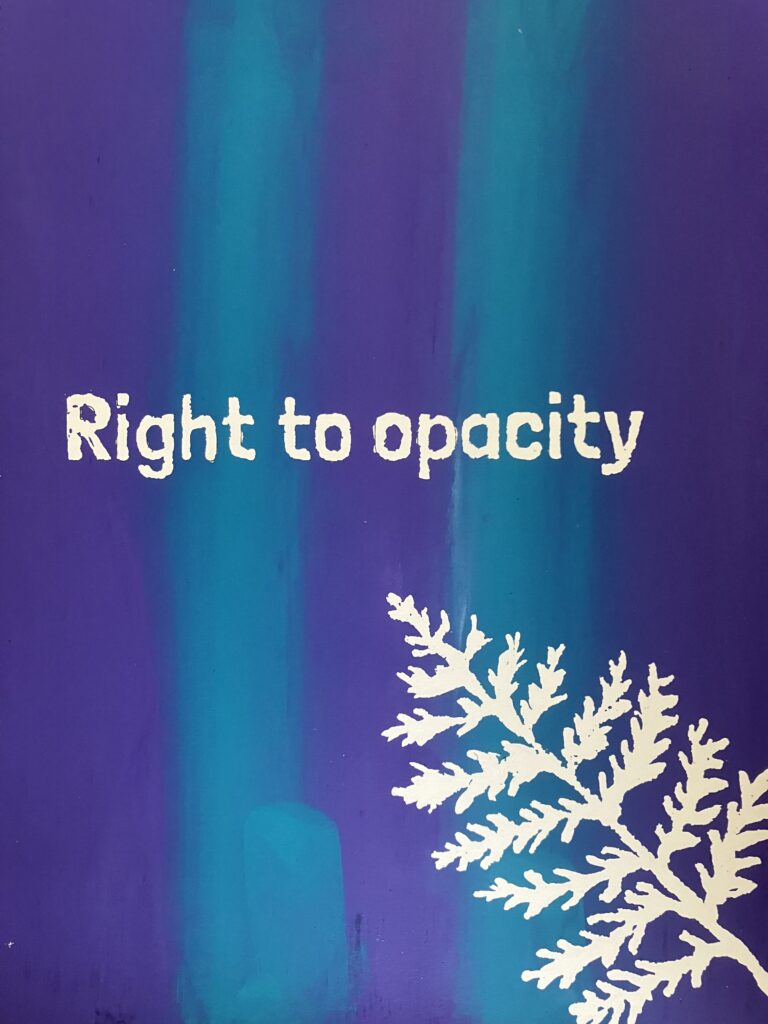
Right to opacity: From the Martinique philosopher and poet, Édouard Glissant, this value affirms that each person is a universe – encompassing layered histories and ever-evolving complexities. It affirms the refusal to measure people against fixed colonial hierarchical ideals, and therefore the right not to be fully known, explained, or reduced to labels, in our webs of lived experiences, identities, beliefs, abilities, strengths, and challenges.
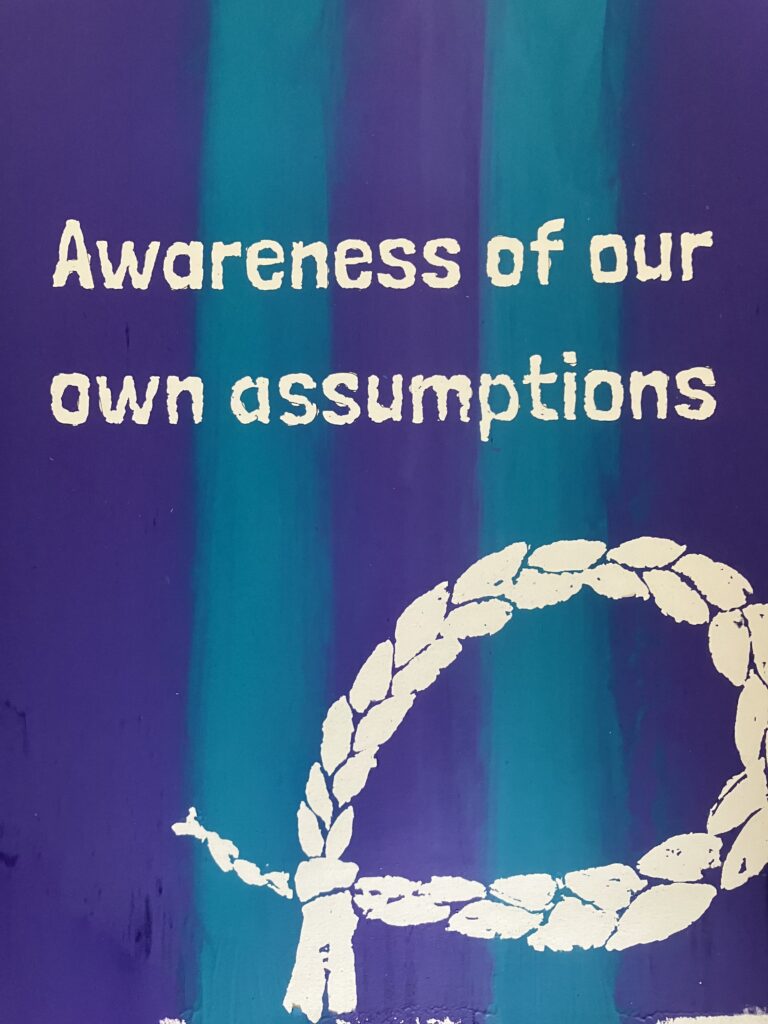
Awareness of our own assumptions: We agree to make space for what cannot be fully known, through an orientation in curiosity when our own assumptions emerge, examining the internal and external contexts they might be shaped by, and not imposing them upon others or even our own encounters. Understanding that each of us has the capacity to harm, heal, and do better, we agree to practice acknowledging when we are wrong, confronting our assumptions, and making changes in how we show up in order to stop or prevent harm.
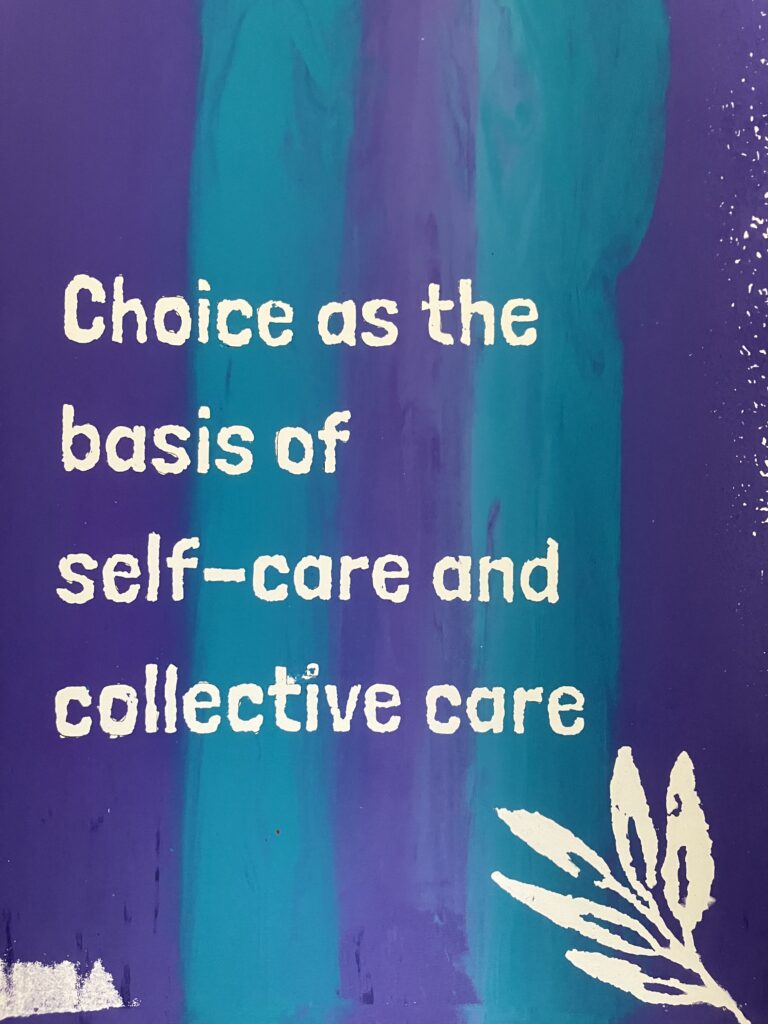
Choice as the basis of self-care and collective care: This value affirms that each of us is at-choice, today and always. We acknowledge that participation is required for both students and instructors alike in an education setting, based on the choice that every student and instructor has made to be here for the acquisition of knowledge, skills and credentials, and/or to teach, share skills and maintain employment. At the same time, everyone is at-choice for their level of participation based on their evolving needs, to take care of themselves, to pause when they need rather than override their bodies if they need a break before one is offered. We also acknowledge that there can be a diversity of shifting, overlapping, and conflicting needs, roles and expectations in this space, and we agree to engage in discussions and collaborations to support each other in co-creating a shared space for learning and belonging.
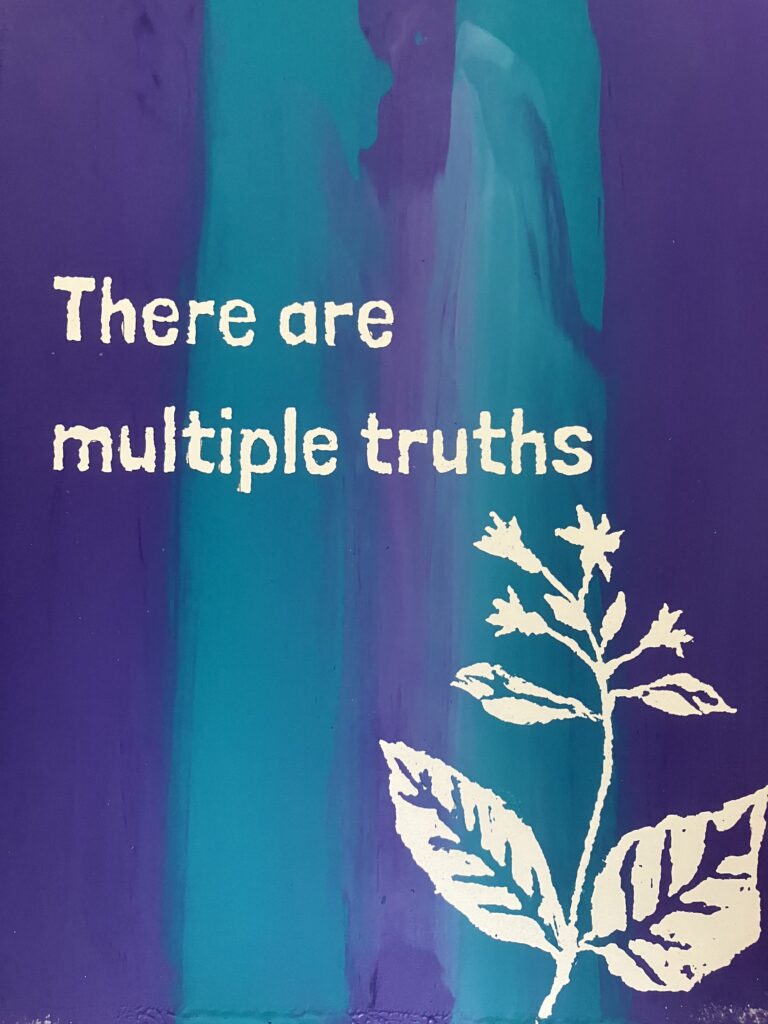
There are multiple truths: We acknowledge that life is complex and there is more than one way of being, knowing, and doing. No one owns the truth: there are always parts of a topic that we don’t know. What we can know, understand and even imagine are always partial and situated, shaped by our particular social positions, experiences and contexts. We agree to practice being curious about what lies outside of our knowledge and imagination.
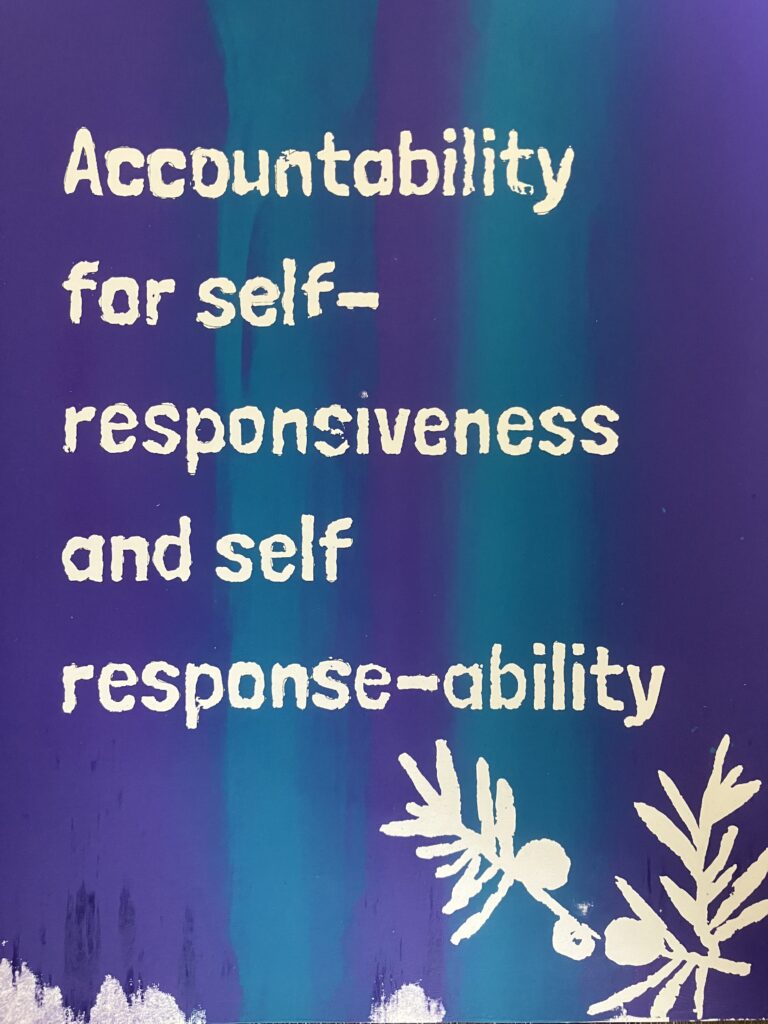
Accountability for self-responsiveness and self response-ability: We agree to be here in our self-sovereignty, with our own boundaries, limits, capacities, and responsibility. We each can choose to say yes, no, maybe, and change our minds, and we are each responsible for holding our own needs, assumptions, values, beliefs and reactions. This is an educational space and does not provide psychotherapy. No student is ever required to take on a viewpoint or do an activity that they don’t want to do. The instructors are not required to fulfil every request that a student makes. No one is required to be perfect. We agree to make space for mistakes in the spirit of learning and for being humyn. We agree to make space for accountability and responsibility, to practice identifying power dynamics, addressing hurtful or harmful actions, and requesting support in resolving conflicts and transforming unhelpful or harmful patterns that arise in our shared space.
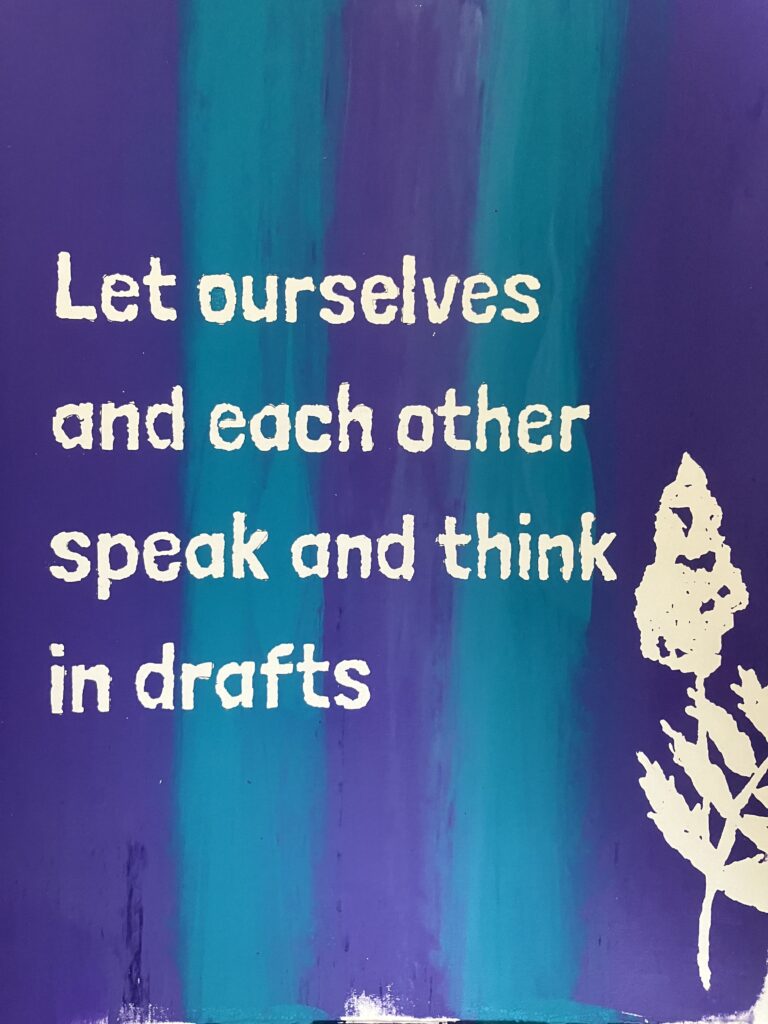
Let ourselves and each other speak and think in drafts: The process of learning requires us to explore and examine ideas that may challenge our beliefs, perspectives and even values. We agree to make space for trying on ideas, exploring contradictions, and speaking without committing, knowing that we don’t have to change our minds about something unless we’re truly ready. We therefore also agree to not reduce or fix others or ourselves to one moment in time, acknowledging and honouring that the ongoing transformation and growth of each person are infinitely more complex than a single interaction.
Bibliography:
Kai Cheng Thom and Karine Bell, 2025-2026, Alchemy of Edge Play (course), Rooted Global Village.
adrienne maree brown, 2017, Emergent Strategy: Shaping Change, Changing Worlds, AK Press.
Édouard Glissant, 2010, Poetics of Relation (trans. Betsy Wing), University of Michigan Press.
Myrna Lewis, 2025, Bridging Polarised Communities with Lewis Deep Democracy, Dispute Resolution Review (vol. 4, issue 3).
Donna Haraway, 2016, Staying with the Trouble: Making Kin in the Chthulucene, Duke University Press.
Donna Haraway, 1988, Situated Knowledges: The Science Question in Feminism and The Privilege of Partial Perspectives, Feminist Studies (vol. 14, issue 3).
Mia Mingus, 2019, Dreaming Accountability, Leaving Evidence.
Much gratitude to the TATI students who inspired this document.
August 2026 – Co-created by TATI staff team:
Writing and artwork by Athena Bee and Patricia Ki
In collaboration with Kristina Borg, Rehaana Manek and Amy Tschupruk
Gratitude to the wisdoms of the local plant medicine featured in our artwork (in the order they appear): oak, cedar, sweetgrass, sage, tobacco, juniper, sumac.